
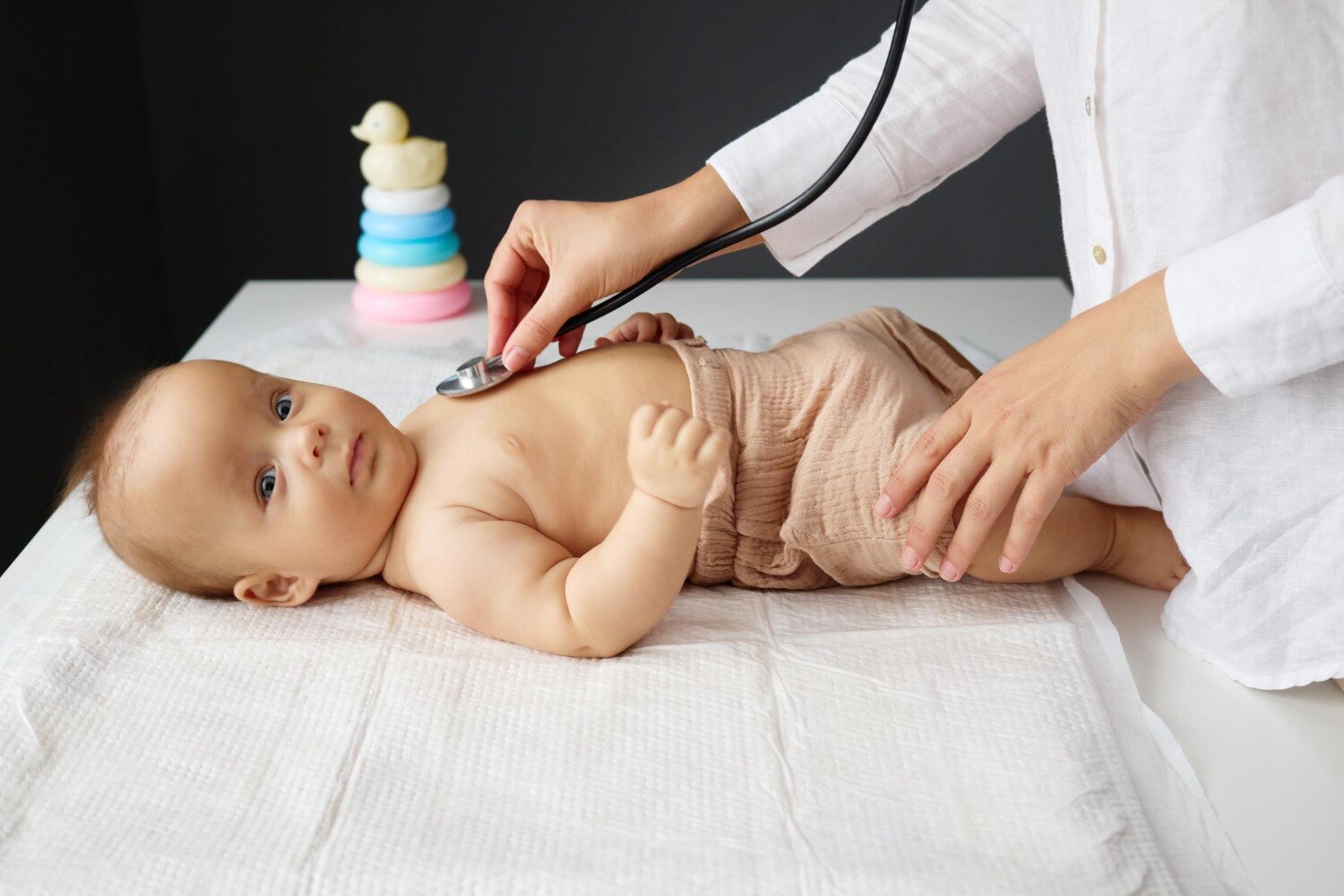
A newborn’s feeding pattern, nappies, weight trend and emerging skills provide practical clues about health, but no single feed, percentile or milestone gives the whole picture. You will learn what to check at home, which changes require prompt assessment, and how feeding choices affect growth and development during the first year.
Key takeaways
- Breastfeed newborns 8–12 times in 24 hours, following early hunger cues.
- Track wet nappies, stools, feeds and weights to identify intake problems early.
- Store expressed milk safely and prepare formula exactly as the label directs.
- Seek review for poor feeding, unusual sleepiness, dehydration signs or developmental concerns.
How often should a newborn feed, and how can you tell milk transfer is working?
A typical newborn feeding schedule is breastfeeding 8–12 times in 24 hours, including overnight. Feed when your baby shows early cues—stirring, hand-to-mouth movements, or rooting—rather than waiting for crying. Some feeds are short and some are long, but long gaps and consistently sleepy feeds need attention.
Effective milk transfer means milk is moving from breast to baby, not simply that the baby is latched. Look and listen for swallowing during feeds, a deep latch without pinching pain, steady sucking that changes to slower sucks and swallows, and a breast that feels softer afterward.
Your baby should relax, release the breast, and appear settled after many feeds.
Use this checklist during the first days:
- Wake and offer feeds at least every 2–3 hours unless your clinician gives different instructions.
- Watch for audible or visible swallowing, not only rapid sucking.
- Track wet nappies; output rises each day, reaching about six or more per day by day 5 in a well-fed breastfed newborn.
- Arrange prompt assessment if your baby is difficult to wake, repeatedly refuses feeds, remains ineffective at the breast, has a painful latch, or feeds fewer than eight times in 24 hours.
- Seek feeding and medical assessment for weight loss over 10% of birth weight, ongoing loss, or failure to regain birth weight by about 10–14 days.
A sleepy newborn who cannot stay awake long enough to feed needs same-day advice. Do not rely on diaper counts alone; weight checks and observed feeding show whether milk transfer is working.
Which nappies, weight changes and feeding records show that a newborn is getting enough?
No single nappy, breast change, or weigh-in proves adequate intake. Judge the pattern across urine, stools, feeding behaviour, breast changes, and serial weights.
| Sign | Reassuring pattern | Concern |
|---|---|---|
| Wet diapers by day of life | About 1 on day 1, 2 on day 2, 3 on day 3, then rising; by about day 5, at least 6 wet diapers daily is common in a well-fed breastfed newborn | Counts stay low, fall after increasing, or urine is consistently dark |
| Newborn stool pattern | Meconium changes to green-brown stools, then loose yellow stools by days 4–5; stools continue regularly during the early weeks | Meconium persists, stools remain unusually scarce, or output changes with poor feeding |
| Satiety after feeds | Baby relaxes, releases the breast, appears settled, and wakes for feeds; hands may open and the mouth looks moist | Persistent sleepiness, frantic feeding, dry mouth, or difficulty waking |
| Breast changes | Breasts feel less full or softer after feeding, with less pressure between feeds as supply adjusts | Breasts remain painfully full, or milk removal appears consistently poor |
| Weight | Normal newborn weight loss occurs after birth, followed by steady gain and regaining birth weight by about 10–14 days | Loss over 10% of birth weight, continued loss, or failure to regain needs prompt assessment |
Record feeds, diaper counts, stool appearance, and weights together. Diapers support the assessment but do not measure milk transfer; rely on a weight check and clinical review when signs disagree.
How should you handle expressed milk, donor milk and formula safely?
Wash your hands, clean pumping equipment, and label expressed breast milk with the date and time. Expressed breast milk storage limits are up to 4 hours at room temperature, 4 days in a refrigerator at 4°C or colder, and about 6 months in a freezer for best quality.
Thaw it in the refrigerator or warm water; never microwave it. Swirl rather than shake, and discard milk left in a bottle after a feed.
- Use screened, pasteurized donor milk from a regulated milk bank when prescribed or supplied through your care team. Follow the bank’s thawing, storage and expiry instructions; do not use unverified shared milk.
- Follow infant formula preparation instructions exactly: use the stated water-to-powder ratio, safe water and clean bottles. Adding extra powder can cause dehydration, while extra water reduces calories. Refrigerate prepared formula promptly and use it within 24 hours; discard a bottle one hour after feeding begins.
- Offer either milk with a paced bottle feeding technique. Hold your baby semi-upright, keep the bottle nearly horizontal, pause every few sucks, and stop when the baby turns away, closes the mouth or relaxes the hands. Never prop a bottle or force the final ounces.
- Breastfed and partially breastfed babies need 400 IU of vitamin D daily. Exclusively breastfed babies usually need iron from about 4 months, often 1 mg/kg/day, based on clinician advice. Iron-fortified formula supplies iron; formula-fed babies generally need vitamin D only below 32 fluid ounces (1 litre) daily.
Before 12 months, do not replace breast milk or iron-fortified formula with cow’s milk, juice or honey.
How do you interpret infant weight and respond to slow or rapid gain?
A single percentile does not define healthy growth; the pattern across time does. Plot weight, length and head circumference on the WHO growth chart, using weight-for-age, length-for-age and weight-for-length together. For a premature infant, use corrected age by subtracting weeks born before 40 weeks, commonly until about 2 years.
| Pattern | What it may suggest | Response |
|---|---|---|
| Stable tracking | Growth is following the child’s established curve | Review feeding and development at routine visits |
| Downward crossing | Intake problem, illness, measurement error or changing body proportion | Recheck technique and assess promptly |
| Rapid upward crossing | Excess intake, fluid change, or an underlying condition | Assess before restricting feeds |
| Low weight-for-length | Thinness, inadequate intake or illness | Examine feeding, hydration and health |
A healthy term infant is usually weighed at a newborn follow-up within 3–5 days, again by 1–2 weeks to confirm recovery toward birth weight, and at routine visits thereafter. Weigh weekly or more frequently only when a clinician requests it; daily home measurements create noise from scales, clothing and recent feeds.
Before changing feeds or adding calories, review a written 24-hour feeding history, latch or bottle technique, milk preparation, vomiting or diarrhoea, urine output, alertness, medicines, illness and examination findings. Check length, head circumference and the scale measurement rather than reacting to one number.
Crossing percentiles alone is not a diagnosis, and rapid gain should not prompt calorie restriction without assessment.
Which feeding changes and developmental signs need professional review?
Seek assessment if a newborn loses more than 10% of birth weight, remains below birth weight after 10–14 days, or shows persistent poor intake. Arrange a slow weight gain assessment when weight crosses downwards on the growth chart, feeds are unusually long or tiring, or illness, vomiting, diarrhoea, or swallowing difficulty could be limiting intake.
Rapid upward crossing of growth-chart percentiles also deserves review before reducing feeds or adding restrictions.
| Concern | Seek review when | Why it matters |
|---|---|---|
| Feeding-related illness | Coughing, choking, blue colour, sweating, repeated vomiting, painful feeds, or refusing feeds | Aspiration, reflux complications, infection, or another medical problem needs assessment |
| Development | A child loses a skill, misses several expected skills, or your concern persists | Regression is not a variation to watch and wait |
| Prematurity | Compare progress using premature infant corrected age: subtract weeks born before 40 weeks from chronological age, commonly until age 2 | Chronological age alone can falsely suggest delay |
| Screening | Complete developmental milestones and screening at 9, 18, and 30 months; autism screening at 18 and 24 months | Screening supplements surveillance at every visit |
Start complementary foods at 6 months when the infant sits with support, controls the head, and reaches for food; do not delay peanut or egg in safe forms, but seek advice first for severe eczema or egg allergy. Exclusively breastfed infants may need 1 mg/kg/day iron from about 4 months until iron-rich foods are established.
Dr Samutirika Dinesh Pediatrician Ecr can help interpret growth, feeding symptoms, corrected age, and screening results together.
Related services
Development Monitoring for Child Developmental monitoring is the ongoing process of observing how your child grows and meets key milestones in playing, learning, speaking, and... View service → |
“GROWTH” is an increase in size of the body and organs, referring to the physical maturation of the body. View service → |
Frequently asked questions
How often should a newborn feed?
Most newborns breastfeed 8–12 times in 24 hours, including overnight. Offer feeds when you notice stirring, hand-to-mouth movements or rooting instead of waiting for crying.
How can you tell whether a newborn is getting enough milk?
Track feeding frequency, wet nappies, stools and weight changes. Consistently sleepy feeds, long gaps or too few wet nappies need professional review.
How should expressed milk and formula be handled safely?
Use clean containers for expressed milk, label it with the date and time, and follow current storage guidance. Prepare formula with the exact water-to-powder ratio on the label and discard unfinished feeds as directed.
How should you respond to slow or rapid infant weight gain?
Use measurements plotted on an appropriate growth chart rather than one isolated weight. Arrange a clinical review when weight crosses centile lines, feeding is difficult or gain is consistently slow or rapid.
Which feeding or developmental signs need professional review?
Seek advice for poor feeding, repeated vomiting, unusual sleepiness, dehydration signs, breathing difficulty or missed developmental progress. Urgent symptoms need prompt medical care.
Related services
As the saying goes, “Breastfeeding is the Best Feeding”, it still stands true through all these years and for many more to come. View service → |
“Development” is acquiring functional skills required for survival. View service → |